
Many women in their 40s and 50s start to notice new pain around the lower back, hips or pelvis. For some, it comes on gradually. For others, it seems to appear without a clear injury.
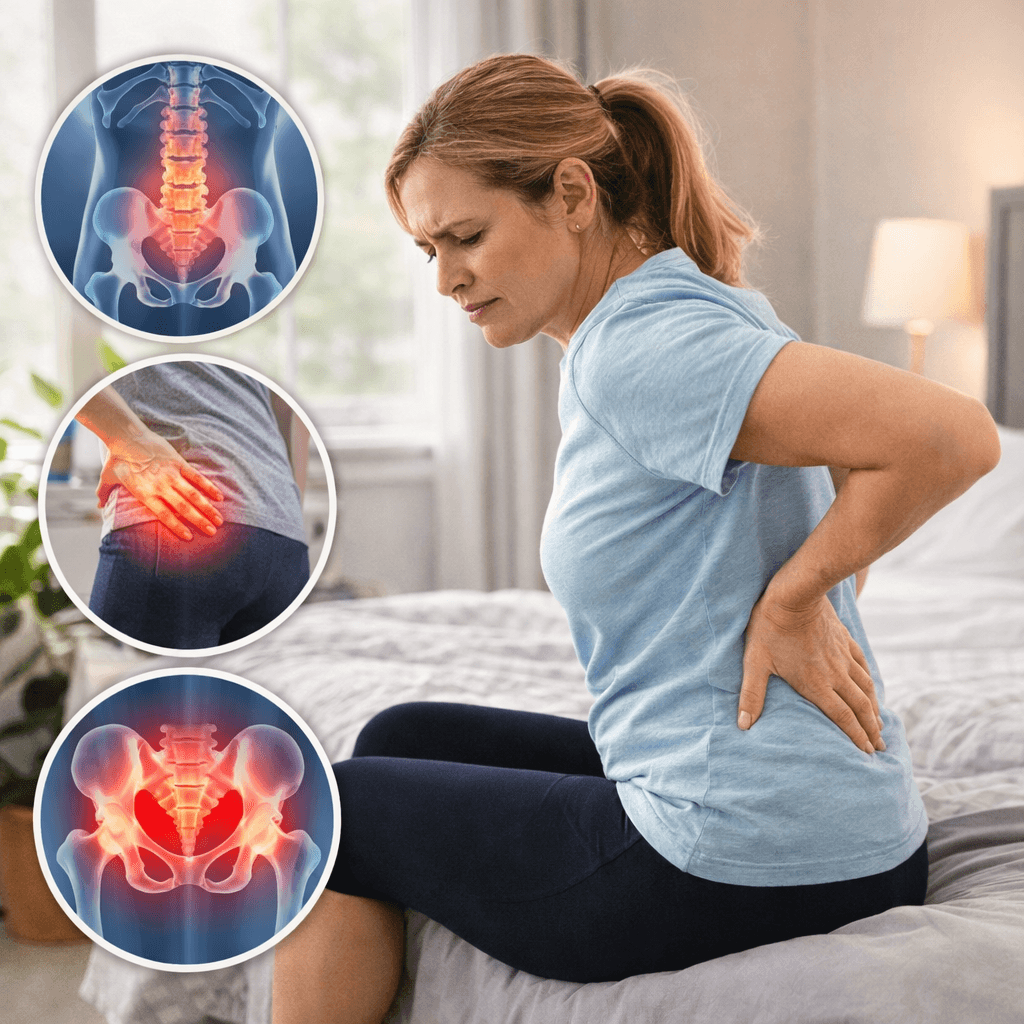
At Healthy Innovations in Thornleigh, this is one of the most common reasons midlife women seek physiotherapy. The challenge is knowing what changes are expected with age and hormonal shifts, and what pain should not be ignored.
Why these areas are so commonly affected in midlife
The lower back, hips and pelvis work as a connected system. Changes in one area often affect the others. Hip pain is very common in midlife women and often has more than one contributing factor.
During perimenopause and menopause, hormonal fluctuations influence:
- Joint lubrication
- Muscle strength and recovery
- Tendon and ligament stiffness
- Pain sensitivity
At the same time, many women are juggling busy work lives, caring roles, reduced sleep and less recovery time. All of this places more load on the spine and hips.
This combination makes these regions particularly vulnerable.
Common symptoms we see in clinic
Pain presents differently for everyone, but common complaints include:
- Aching or stiffness in the lower back, especially in the morning
- Hip pain when walking, lying on one side or getting out of the car
- Pelvic discomfort or a feeling of instability
- Pain that flares with exercise but settles with rest
- Reduced confidence with movement
Some of these changes can be expected. Others signal that something needs to be addressed.
What can be considered normal
It is common to notice:
- Mild stiffness after long periods of sitting
- Slower warm up times before exercise
- Temporary soreness after new or increased activity
These symptoms should improve with movement, gentle exercise and appropriate recovery.
What is not normal and should be assessed
Pain is not something you have to accept as part of ageing.
Red flags include:
- Pain that is worsening over time
- Pain that limits daily activities
- Night pain that disrupts sleep
- Recurrent flare ups despite reducing exercise
- Pelvic or hip pain associated with feelings of weakness or instability
These signs suggest the body is struggling to cope with load and needs support. Also changes in posture over time can place extra load on the hips, pelvis and lower back.
Why rest alone is rarely the answer
Many women respond to pain by stopping exercise altogether. While this may settle symptoms short term, it often leads to reduced strength, poorer joint support and increased stiffness.
The goal is rarely to stop moving. The goal is to move better, with the right guidance.
Targeted strength, mobility and load management are far more effective than rest alone.
How physiotherapy can help
Physiotherapy focuses on understanding why pain is occurring, not just where it is felt.
At Healthy Innovations, we assess:
- How your spine, hips and pelvis move together
- Strength and control through key muscle groups
- Load tolerance and recovery capacity
- Exercise habits and daily demands
From there, treatment may include manual therapy, specific strengthening, movement retraining and guidance around exercise modification.
For many women, combining physiotherapy with Pilates, massage or chiropractic care provides the best results, particularly when pain has been present for some time.
The key takeaway
Some physical changes are expected in midlife, but ongoing back, hip or pelvic pain is not something you should simply tolerate.
Early assessment and the right plan can prevent pain from becoming persistent and help you stay active and confident in your body.
Healthy Innovations provides physiotherapy in Thornleigh with a strong focus on supporting women through midlife changes and helping them move well long term.
Related reading