
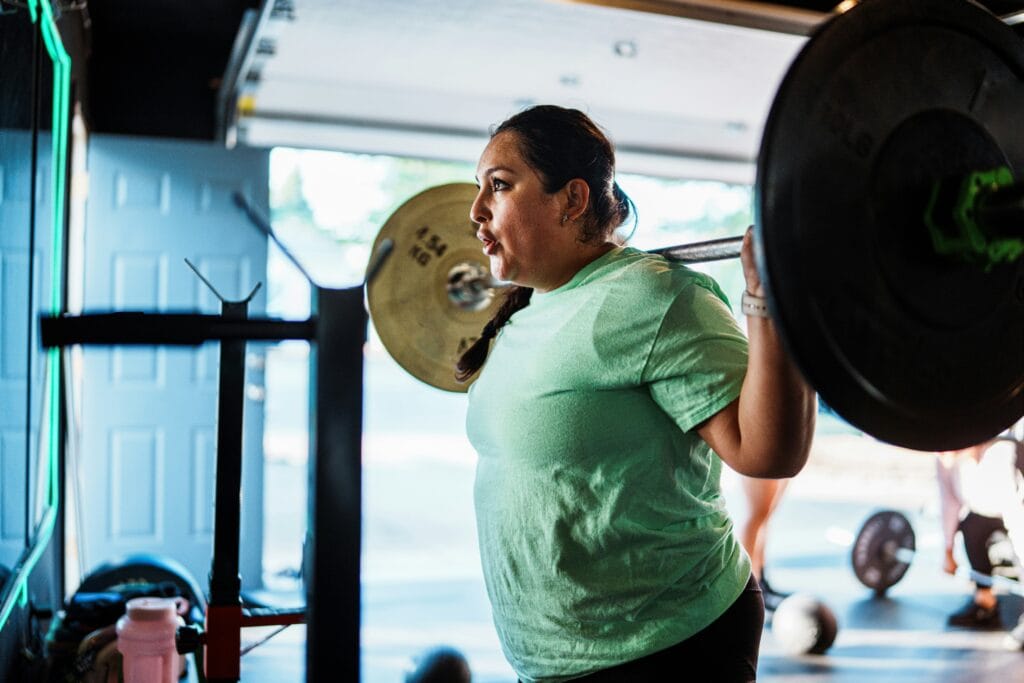
Many women return to the gym in their mid- to late 40s with clear goals. They want to feel stronger, support bone health, maintain muscle, and stay active long-term. Despite good intentions, this return is often followed by pain or injury that never used to occur when they were younger. Additionally, many women are unsure whether walking, Pilates or gym training is the best option for their body.
At Healthy Innovations in Thornleigh, we see this frequently. The issue is rarely motivation. It is usually how the body responds to load during this stage of life.
Why returning to the gym feels different after 45
During perimenopause and menopause, changes occur that affect how the body adapts to training.
These include:
- Reduced muscle mass and strength if training has been inconsistent
- Changes in tendon and ligament tolerance
- Slower recovery between sessions
- Increased sensitivity to overload and poor technique
Training the way you did in your 30s often exceeds what the body can currently tolerate.
Common mistakes women make when returning to training
Most issues are related to structure rather than effort.
Common patterns include:
- Doing too much too soon
- Returning straight to high-intensity classes
- Increasing weights before rebuilding movement control
- Training hard on consecutive days with limited recovery
- Ignoring early warning signs of pain or stiffness
- poor lifting techniques and movement patterns
These increase the risk of tendon pain, back issues, and hip or shoulder injuries.
What works better for women over 45
A safer return to the gym focuses on quality, not intensity.
Strength training remains essential, but progression must be gradual. Controlled movements and appropriate loads allow joints and connective tissue to adapt.
Recovery is part of training. Rest days support adaptation rather than setting you back.
Technique matters more than ever. Poor movement patterns increase stress on the spine, hips, and shoulders.
Programs need to be individual. Generic gym programs rarely account for hormonal changes, injury history, or recovery capacity.
Why pain should not be pushed through
Many women push through pain to avoid losing fitness. Unfortunately, this often leads to longer interruptions from training.
Pain is a sign that the current load exceeds tissue capacity. Early adjustment prevents small issues from becoming persistent injuries. It can be frustrating when pain keeps returning even though you think you are doing the right things.
How physiotherapy supports a safe return to the gym
Physiotherapy helps bridge the gap between wanting to train and training safely.
At Healthy Innovations, we assess:
- Movement patterns and joint control
- Strength balance and load tolerance
- Previous injuries and current symptoms
- Training habits and recovery
From this, we guide exercise selection, gym modifications, and progression so strength improves without flare-ups.
Many women benefit from combining physiotherapy with Pilates or supervised strength training for better long-term results.
Related reading
- Walking, Pilates or the Gym: What’s Best for Midlife Women?
- Why Pain Keeps Coming Back Even When You Exercise and Stretch
The key takeaway
Returning to the gym after 45 is one of the most effective ways to support long-term health, but it requires a different approach.
Building strength without injury is not about doing less; it is about doing what your body can adapt to now.
Healthy Innovations provides physiotherapy in Thornleigh with a strong focus on helping women return to strength training safely and confidently through midlife and beyond.