
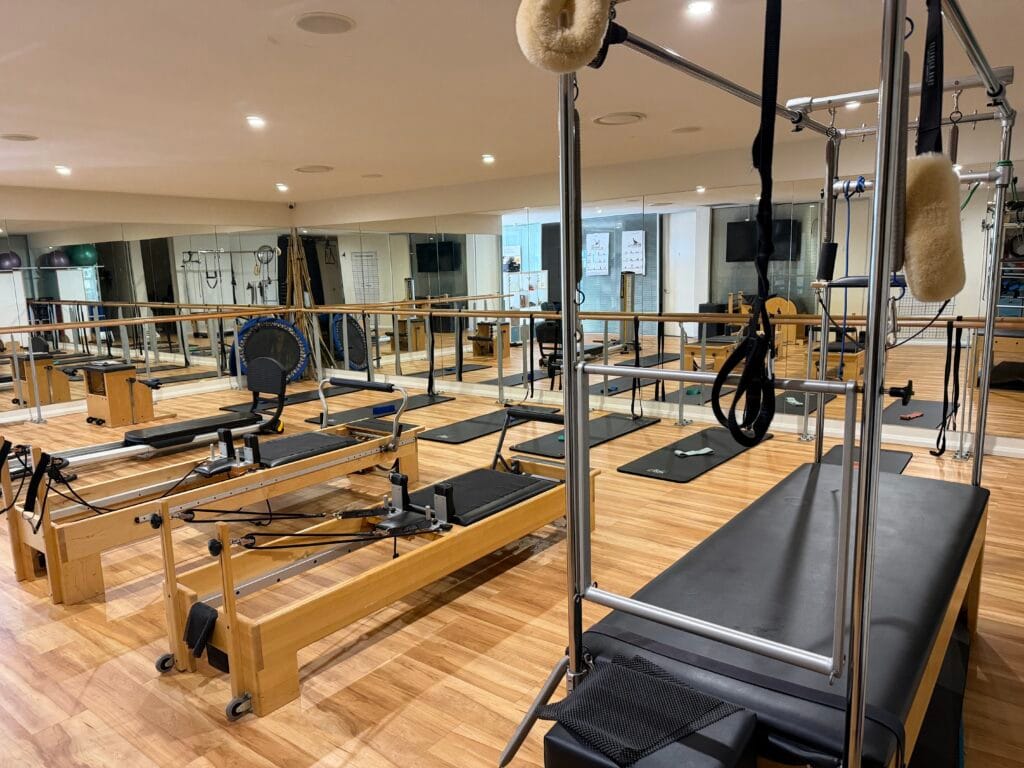
Many women ask what the best type of exercise is in midlife. Walking feels safe. Pilates feels controlled. The gym feels effective but sometimes intimidating.
At Healthy Innovations in Thornleigh, the answer is rarely one single option. The best exercise is the one your body can tolerate, recover from and progress with over time.
Why there is no single best exercise
During perimenopause and menopause, the body’s response to load and recovery changes. What feels good one week may trigger pain the next.
Exercise choice needs to consider:
- Current pain or injury
- Strength and joint mobility
- Recovery capacity
- Stress and sleep quality
- Confidence with movement
This is why copying someone else’s program or following generic advice often leads to frustration.
The role of walking
Walking is accessible, low impact and easy to maintain. It supports cardiovascular health, mood and general movement.
However, walking alone does not build enough strength to support joints long term. For women experiencing recurring pain, walking can also aggravate symptoms if load tolerance is low or movement patterns are inefficient.
Walking is valuable, but it is rarely sufficient on its own.
The role of Pilates
Pilates focuses on control, posture and strength through the trunk and hips. For many midlife women, this can feel supportive and confidence building.
Pilates is particularly helpful when:
- Core strength feels reduced
- Back or pelvic pain is present
- Movement confidence is low
However, Pilates needs to be well guided and appropriately progressed. Generic classes that do not account for pain or limitations can still overload tissues.
The role of gym-based strength training
Strength training is one of the most important tools for maintaining muscle mass, bone health and joint support in midlife.
The challenge is how it is introduced.
Returning to the gym too quickly or following high intensity programs without adequate preparation often leads to flare ups. Technique, progression and recovery are critical.
When done well, gym-based training is extremely effective.
How physiotherapy helps guide exercise choice
Physiotherapy helps determine which type of exercise is appropriate at any given time.
This includes assessing:
- Movement patterns and joint control
- Strength and load tolerance
- Pain triggers and recovery response
From this, exercise can be tailored and progressed safely rather than relying on trial and error. Core strength and pelvic control are essential regardless of the type of exercise chosen.
The role of chiropractic and massage in exercise tolerance
Chiropractic care supports joint mobility, particularly through the spine and pelvis. Improved movement can make walking, Pilates and gym training feel easier and less restricted.
Massage therapy supports recovery by reducing muscle tension and fatigue. This can help the body tolerate exercise better and reduce post exercise soreness when used appropriately.
Together with physiotherapy, these services support both movement and recovery, which is essential for consistency.
The key takeaway
There is no single best exercise for midlife women.
Walking, Pilates and gym training all have value. The right choice depends on how your body is functioning now and how well it recovers.
The most effective approach is one that matches exercise to your needs and adapts as your body changes. For women already experiencing pain such as hip discomfort or other types of pain, exercise selection needs to be adjusted carefully.
Healthy Innovations provides physiotherapy, chiropractic, Pilates and massage therapy in Thornleigh, with a strong focus on helping women stay active, strong and confident through midlife and beyond.
Related reading