
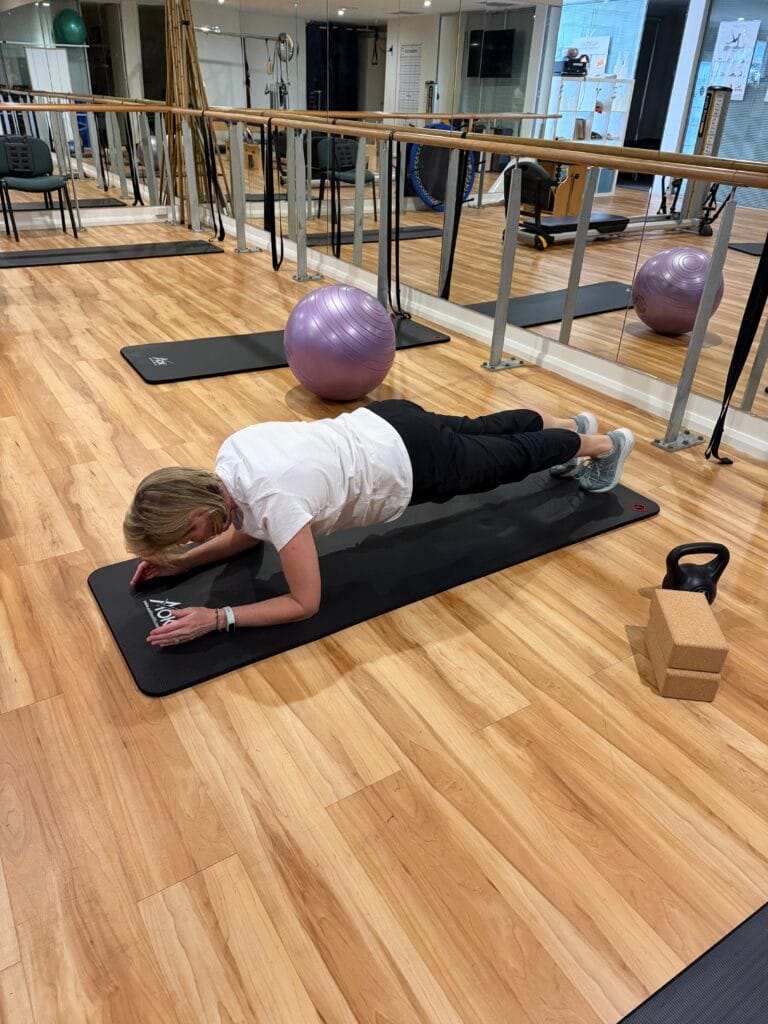
Many women notice that core exercises feel harder after their mid 40s. Movements that once felt straightforward may now trigger back discomfort, pelvic tension or a feeling of weakness and instability. Moreover, many women notice that pain starts and keeps returning even when they are stretching and exercising consistently.
At Healthy Innovations in Thornleigh, this is a common concern. Core strength does not suddenly disappear after 45, but the way the body recruits and supports the core does change.
What the core actually is
The core is more than abdominal muscles.
It includes:
- Deep abdominal muscles
- Pelvic floor muscles
- Muscles around the hips
- Muscles that support the spine
- Diaphragm
These systems work together to support posture, movement and load transfer during daily activities and exercise.
When one part of this system is not functioning well, other areas often compensate.
Why core strength feels different in midlife
During perimenopause and menopause, several factors influence core function.
These include:
- Reduced muscle mass if strength training has been inconsistent
- Changes in muscle activation and coordination
- Increased joint stiffness, particularly through the spine and pelvis
- Reduced recovery capacity and increased muscle fatigue
- suboptimal posture – ie. you are stuck in an anterior pelvic tilt
As a result, traditional core exercises may feel harder or aggravate symptoms rather than improve them.
Common mistakes women make with core training
Many women are told they need to strengthen their core, but without proper assessment.
Common issues include:
- Overusing superficial abdominal muscles
- Bracing too hard instead of allowing normal movement
- Ignoring pelvic floor function
- Performing exercises that overload the lower back or hips
- Not addressing suboptimal posture
When this happens, the core becomes tense rather than supportive.
What actually helps core strength after 45
Effective core training in midlife focuses on control, coordination and appropriate loading.
This usually includes:
- Exercises that integrate breathing and pelvic floor support
- Improving movement through the hips and spine
- Gradual strength progression rather than prolonged bracing
- Matching exercises to current symptoms and daily demands
- Addressing postural compensations
Reducing excess muscle tension is also important. Tight, fatigued muscles do not activate or support movement efficiently.
How physiotherapy, chiropractic and massage work together
Each service plays a different role in improving core function.
Physiotherapy focuses on retraining how the core works during movement. This includes improving strength, coordination and load tolerance so the body feels supported rather than restricted. Clinical Pilates can be particularly effective for rebuilding core strength in a safe and progressive way.
Chiropractic care focuses on joint mobility, particularly through the spine and pelvis. Improving joint movement allows core muscles to activate more effectively and reduces compensatory strain.
Massage therapy supports this process by reducing muscle tension and fatigue. When muscles are less guarded and overloaded, they respond better to strengthening and movement retraining.
Together, these approaches help restore balance between movement, strength and recovery, which is essential for long term improvement.
The key takeaway
Core strength after 45 is not about doing harder exercises. It is about doing the right exercises for how your body is functioning now, while also addressing joint movement and muscle tension.
If core work makes your pain worse or feels ineffective, it is often a sign that the approach needs to change.
Healthy Innovations provides physiotherapy, chiropractic and massage therapy in Thornleigh, with a strong focus on helping women build functional core strength and move with confidence through midlife and beyond.
Related reading