
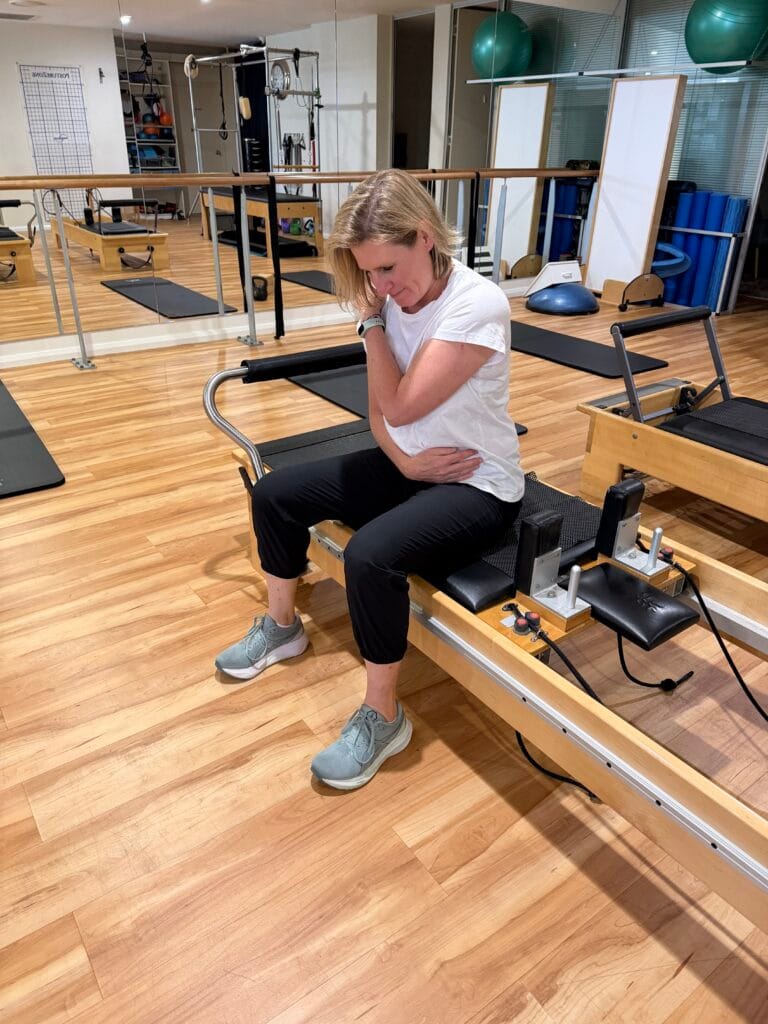
Shoulder pain is one of the most frustrating issues women experience in midlife. It can affect sleep, gym training, daily tasks and even simple movements like reaching or getting dressed.
At Healthy Innovations in Thornleigh, many women tell us their shoulder pain appeared gradually, without a clear injury. In most cases, the shoulder itself is only part of the problem. Early physiotherapy intervention can prevent shoulder pain from becoming long term.
Why shoulder pain increases in midlife
The shoulder relies heavily on both mobility and stability. During perimenopause and menopause, several changes can affect how well this balance is maintained.
Common contributors include:
- Reduced strength around the shoulder and upper back
- Increased stiffness through the upper spine and rib cage
- Changes in posture related to work, poor habits, stress or fatigue – changes in posture through midlife can significantly affect shoulder loading and movement patterns.
- Reduced recovery capacity
- Increased sensitivity to load and repetitive movements
When these factors combine, the shoulder often becomes overloaded, even during activities that previously felt easy.
Common shoulder pain patterns we see
Midlife shoulder pain often presents as:
- Pain when lifting weights or exercising
- Discomfort when reaching overhead or behind the body -ie. hanging up the laundry
- Night pain or difficulty sleeping on one side
- A feeling of weakness or catching rather than sharp pain
Many women worry about rotator cuff tears or arthritis. While these can occur, they are not the most common cause of shoulder pain we see in this age group.
Why the neck and upper spine matter
The shoulder does not work in isolation. Movement through the upper spine, ribs and neck plays a major role in how the shoulder functions.
If the upper spine is stiff or not moving well, the shoulder often has to work harder to achieve the same range of motion. Over time, this increases strain on tendons and muscles around the shoulder.
This is why treating the shoulder alone often provides only short term relief.
How physiotherapy, chiropractic and massage help shoulder pain
Each service addresses a different contributor to shoulder pain.
Physiotherapy focuses on improving shoulder strength, control and load tolerance. This helps the shoulder cope with daily activities and exercise without ongoing irritation. Shoulder pain can become recurring if the underlying contributors are not addressed.
Chiropractic care focuses on restoring movement through the spine and rib cage. Improving mobility in these areas reduces stress on the shoulder and allows more efficient movement.
Massage therapy supports recovery by reducing muscle tension through the neck, upper back and shoulder muscles. This can improve comfort and help the body respond better to strengthening and mobility work.
Together, these approaches provide more comprehensive care than treating the shoulder in isolation.
The key takeaway
Shoulder pain in midlife women is common, but it is rarely just a shoulder problem.
Understanding how the shoulder, spine and surrounding muscles work together is key to long term improvement.
Healthy Innovations provides physiotherapy, chiropractic and massage therapy in Thornleigh, with a strong focus on helping women reduce shoulder pain and move with confidence through midlife and beyond.
Related reading