
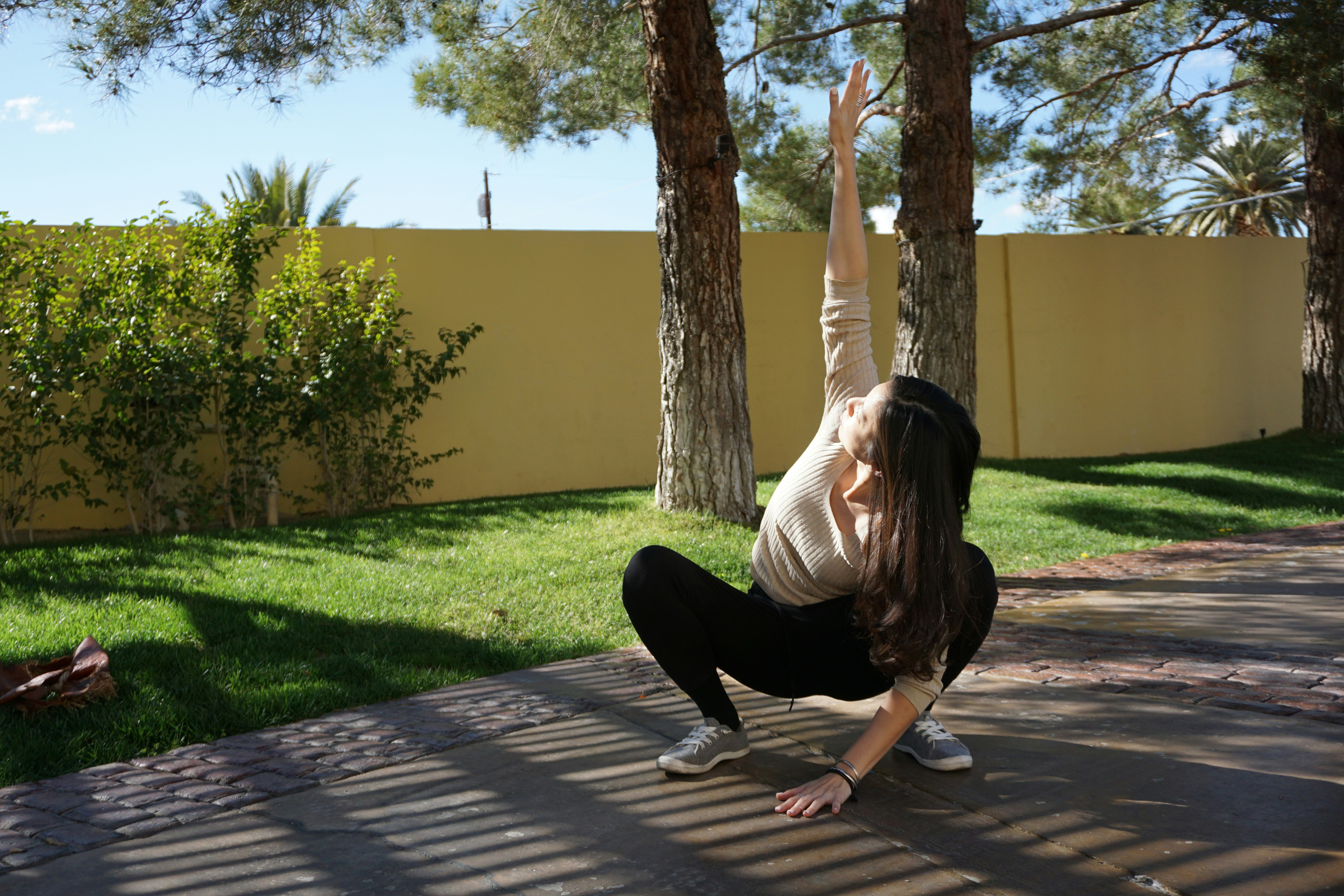
Last term was about opening things up. Hips, ankles, shoulders, spine, all the ranges that tend to quietly disappear as we move through midlife and beyond. If you came to class regularly, chances are you can now get into positions you couldn’t a few months ago.
This term, we’re shifting focus. It’s not enough to simply reach a new range of motion. The real goal is to build strength within that range, so your body can actually use it and trust it. This is the difference between a position you can pass through and a position you truly own.
Our approach this term draws on two methods Shelley has been training in:
Movement and antifragility. The idea here is simple but powerful: your body gets stronger and more resilient not by avoiding stress, but by being progressively and safely challenged. A stretch that improves your flexibility for a moment doesn’t mean much if you can’t produce strength from that position under load. So rather than treating mobility and strength as separate goals, we train them together. You don’t just get into the range, you learn to control it, load it, and hold it.
Biomechanics-based movement correction. The second influence looks closely at where the body is actually limited, whether that’s the ankle, hip, or foot, and uses loaded exercise (not passive stretching) to retrain those areas. The philosophy is “less rehab, more training.” Instead of doing isolated corrective exercises that don’t carry over into real life, we build strength directly into the movement patterns that matter, like squatting, hinging, and rotating.
Why so many of you are dealing with tight hamstrings
This is one of the most common things we hear in the studio, and it’s worth explaining properly, because “tight hamstrings” usually isn’t really about the hamstring muscle being short.
More often, it’s a protective response. If your nervous system doesn’t feel confident that your body can produce strength or control at the end of a range (say, in a deep hip hinge or a full squat), it will tighten the surrounding muscles as a kind of safety brake. Add in hours of sitting each day, which shortens the hip flexors and changes how the pelvis moves, and the hamstrings end up doing extra work to compensate. Stretching alone tends to give short-term relief because it doesn’t address why the tightness is there in the first place.
The fix isn’t more stretching. It’s teaching your body that it’s safe and strong at end range, through slow, loaded, controlled movement. That’s exactly what this term of Pilates is built around.
What this looks like in class
Across the term, you’ll notice more work that combines control with load at end ranges, think loaded hip hinges, deeper squat variations, and hamstring and glute strengthening through fuller ranges of motion, alongside the mobility work you’re already familiar with. The goal is that by the end of term, the mobility you built last term feels genuinely stronger and more usable in everyday life, not just in the studio.
A bit of fun along the way
We’re inviting anyone keen to track their own progress to volunteer for a simple squat photo, one at the start of term and one at the end. It’s a great, visual way to see how far your strength and control have come. The client who shows the greatest improvement in their squat by the end of term will win a complimentary massage.
If you’d like to take part, let Shelley know at your next class. Participation is completely optional and all photos are kept private and used only for your own before and after comparison.
Our Pilates term runs from 20 July to 10 October, including the holiday period and make-up classes. If you have any questions about where this fits for you, just ask Shelley or Natasha
Last term was about opening things up. Hips, ankles, shoulders, spine, all the ranges that tend to quietly disappear as we move through midlife and beyond. If you came to class regularly, chances are you can now get into positions you couldn’t a few months ago.
This term, we’re shifting focus. It’s not enough to simply reach a new range of motion. The real goal is to build strength within that range, so your body can actually use it and trust it. This is the difference between a position you can pass through and a position you truly own.
Our approach this term draws on two methods Shelley has been training in:
Movement and antifragility. The idea here is simple but powerful: your body gets stronger and more resilient not by avoiding stress, but by being progressively and safely challenged. A stretch that improves your flexibility for a moment doesn’t mean much if you can’t produce strength from that position under load. So rather than treating mobility and strength as separate goals, we train them together. You don’t just get into the range, you learn to control it, load it, and hold it.
Biomechanics-based movement correction. The second influence looks closely at where the body is actually limited, whether that’s the ankle, hip, or foot, and uses loaded exercise (not passive stretching) to retrain those areas. The philosophy is “less rehab, more training.” Instead of doing isolated corrective exercises that don’t carry over into real life, we build strength directly into the movement patterns that matter, like squatting, hinging, and rotating.
Why so many of you are dealing with tight hamstrings
This is one of the most common things we hear in the studio, and it’s worth explaining properly, because “tight hamstrings” usually isn’t really about the hamstring muscle being short.
More often, it’s a protective response. If your nervous system doesn’t feel confident that your body can produce strength or control at the end of a range (say, in a deep hip hinge or a full squat), it will tighten the surrounding muscles as a kind of safety brake. Add in hours of sitting each day, which shortens the hip flexors and changes how the pelvis moves, and the hamstrings end up doing extra work to compensate. Stretching alone tends to give short-term relief because it doesn’t address why the tightness is there in the first place.
The fix isn’t more stretching. It’s teaching your body that it’s safe and strong at end range, through slow, loaded, controlled movement. That’s exactly what this term of Pilates is built around.
What this looks like in class
Across the term, you’ll notice more work that combines control with load at end ranges, think loaded hip hinges, deeper squat variations, and hamstring and glute strengthening through fuller ranges of motion, alongside the mobility work you’re already familiar with. The goal is that by the end of term, the mobility you built last term feels genuinely stronger and more usable in everyday life, not just in the studio.
A bit of fun along the way
We’re inviting anyone keen to track their own progress to volunteer for a simple squat photo, one at the start of term and one at the end. It’s a great, visual way to see how far your strength and control have come. The client who shows the greatest improvement in their squat by the end of term will win a complimentary massage.
If you’d like to take part, let Shelley know at your next class. Participation is completely optional and all photos are kept private and used only for your own before and after comparison.
Our Pilates term runs from 20 July to 10 October, including the holiday period and make-up classes. If you have any questions about where this fits for you, just ask Shelley or Natasha.